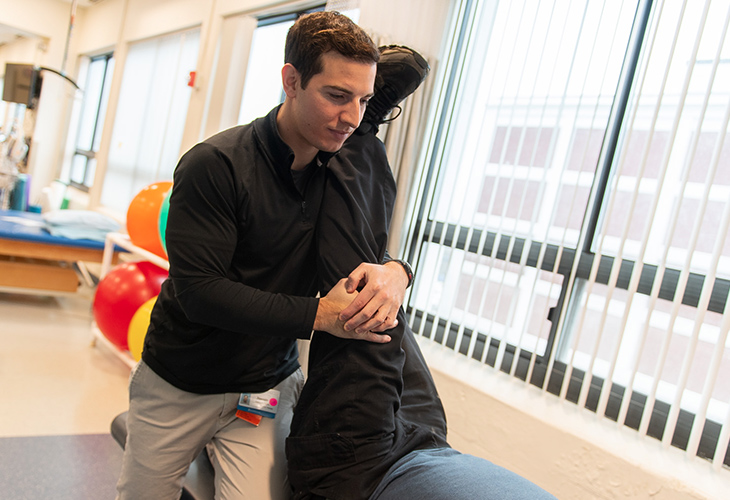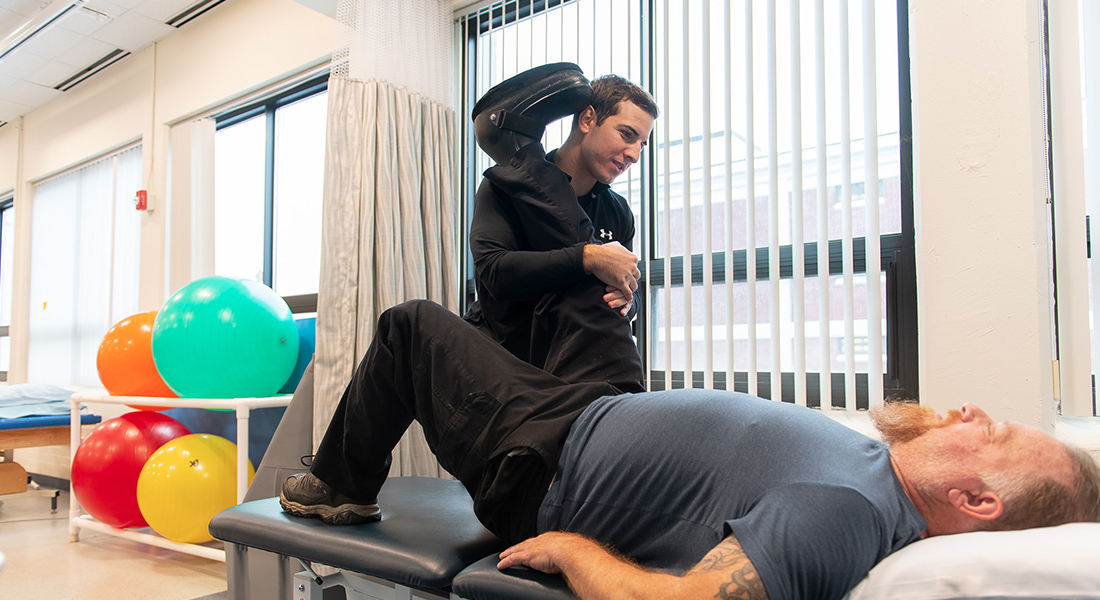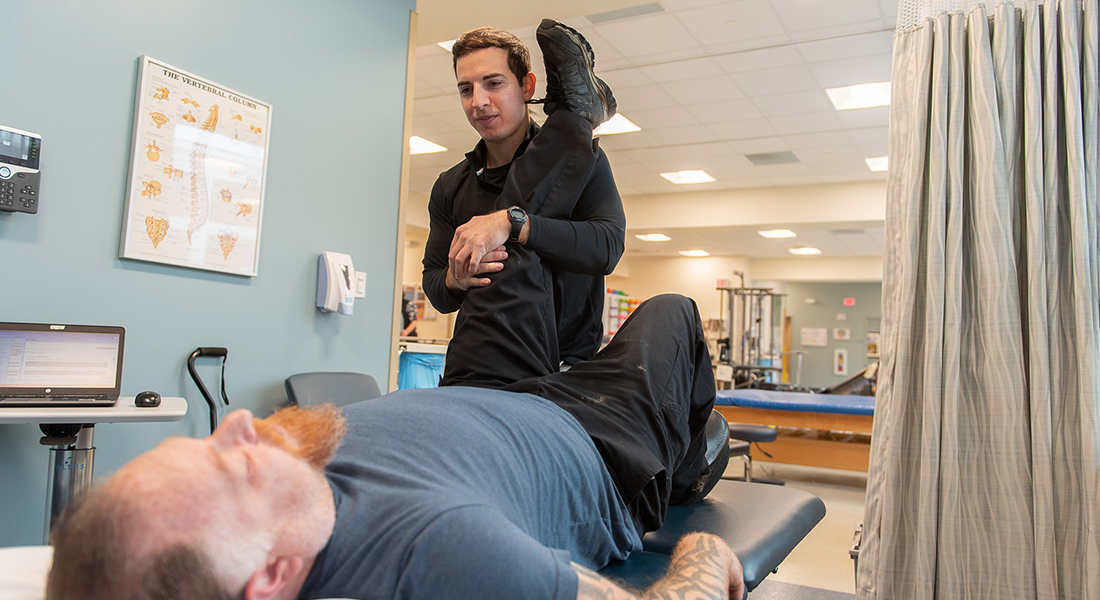
Spaulding Hospital for Continuing Medical Care North Shore

Spaulding North Shore (formerly known as Shaughnessy-Kaplan Rehabilitation Hospital) has been providing care for residents of greater North Shore and Merrimack Valley communities since 1975. We have a 120-bed long-term acute care (LTAC) facility and a 40-bed transitional care unit (TCU), sometimes referred to as a skilled nursing facility (SNF). Our programs and services meet the highest quality standards.

At Spaulding North Shore, we provide a wide range of inpatient medical and rehabilitation services at the acute, subacute and skilled nursing levels of care, including:

We work closely with the referring facility to ensure that our care is personalized and "just what the doctor ordered," accepting patients and providing therapy seven days per week. Family tours can be arranged at any time. Our admissions staff is happy to answer any questions about the referral process.

Learn more about our Management and our History, and read Frequently Asked Questions about our hospital.

Management

Management of Spaulding North Shore

Mary Beth DeFilippo
Vice President of Operations, Director of Nursing, Executive Director of TCU
Ms. DeFilippo is the Vice President of Operations and Director of Nurses at Spaulding Hospital North Shore in addition to serving as the Executive Director of the Transitional Care Unit (TCU). 

She has held various positions and worked in different healthcare settings over the span of her career including staff nurse in acute care, nurse educator in long term care, and most recently, before joining the Spaulding Network, as an Associate Chief Nurse at the North Shore Medical Center. She also teaches in the Nursing Program at Salem State University.

Ms. DeFilippo received her BSN from St. Anselm’s College followed by her MSN from Salem State College and is now in the process of obtaining her Doctorate of Nursing Practice Degree from Regis College. 


Charles Pu, MD
Chief Medical Officer
Charles Pu, MD is the Chief Medical Officer for Spaulding North Shore. Throughout his career, Dr. Pu has been an active member of the community, volunteering on advisory councils, ensuring quality patients care through Falls Prevention, Rapid Response, and Peer Review teams. He has led numerous symposia and given multiple lectures on varied topics from palliative care, aging exercise Christ heart disease as well as prevention and health promotion.

Dr. Pu received his BSE in Bioengineering from the University of Pennsylvania. His medical degree is from University of Medicine and Dentistry of New Jersey (UMDNJ) Robert Wood Johnson Medical School and he completed his internal medicine and primary care residency at Mount Auburn Hospital.


Richard L. Zaniewski
Chief of the Department of Rehabilitation Medicine
Spaulding Hospital for Continuing Medical Care North Shore

Richard L. Zaniewski, DO is the Chief of Rehabilitation Medicine for Spaulding North Shore. He has worked in rehabilitation for over 20 years, holding special clinical interest in general rehabilitation and post-polio syndrome.

Dr. Zaniewski received his medical degree from University of Health Sciences College of Osteopathic Medicine and completed his residencies at Union Hospital and the University of Medicine and Dentistry of New Jersey

History

History of Spaulding North Shore

1700s – A hospital was put in place on Cat Island for inoculations for small pox.

1774 – The hospital was burned by a mob and rebuilt in Great Pasture.

1818 – The hospital was once again destroyed and rebuilt in the lower part of the Neck.

1846 – For the third time, the hospital was destroyed.

1860 – The hospital was rebuilt in the same location as a contagious disease hospital and was aptly named the Salem Hospital for Contagious Diseases.

1930 – The hospital was renamed the Salem Health Department Hospital.

1952 – With the advent of better drugs to fight contagious diseases, the Board of Health felt that the facility should be put to the task of addressing what was one of the most pressing public health problems facing the city: the care of the aged and chronically ill.

1970 – With the age of the building no longer meeting modern standards for hospitals, the Board was faced with the decision to either construct a new facility or abandon the building. The decision was to build a new, modern facility.

1975 – The 160-bed Dr. J. Robert Shaughnessy Rehabilitation Hospital / Dr. Israel Kaplan Public Health Center was dedicated at its new location off of Jefferson Avenue in Salem, behind Salem Hospital. Named for the two key individuals who championed the building of the new facility, it became known over time as Shaughnessy-Kaplan Rehabilitation Hospital (SKRH).

1990 – Salem Hospital Corporation, later to become North Shore Medical Center (NSMC), took over the management of the hospital license.

1996 – NSMC became the first community-based system to become a full member of Partners HealthCare.

2004 – SKRH joined the non-acute care services of the Partners HealthCare system, which consisted of Spaulding Rehabilitation Hospital and other facilities.

Today – The hospital is now Spaulding Hospital for Continuing Medical Care North Shore. The hospital’s connection to the Spaulding Rehabilitation Network and Partners HealthCare provides unique access to world-class medical resources.

FAQs

Frequently Asked Questions

About Admissions:

Q. How do I get admitted?
A: Admissions to Spaulding inpatient programs are completed by a physician referral or by pre-admission through a Spaulding representative at an acute-care facility. Admission criteria are determined by each program. Patient referrals may be made by calling 1-888-774-0055.  

Q. What should I expect when I arrive?
A: A member of our care team will help you get you settled at Spaulding. Your Spaulding physician and nurse will meet with you within the first 24 hours of your stay. You will meet your other team members either that day or the next.

Q. What rehabilitation services does Spaulding offer?
A: The Spaulding Rehabilitation Network offers major rehabilitation programs including amputee and vascular disease rehabilitation, brain injury rehabilitation, burn rehabilitation, pediatric and adolescent rehabilitation, disorder of consciousness rehabilitation for those with severe brain injuries, musculoskeletal rehabilitation, spinal cord injury rehabilitation and stroke/neurology rehabilitation. We offer specialized programs in ventilator weaning, oncology, pulmonary, cardiac care, neurology/stroke, post-organ transplant, post-surgical and orthopedics. Our clinical capabilities include a unique combination of complex medical and rehabilitative care, with comprehensive physical, occupational and speech therapy. We provide management of chemotherapy, peritoneal and hemodialysis, pain management and complex wound care.

Q. How much therapy will I receive?
A: Your treatment team determines the amount of therapy you will receive. The frequency of your therapy may vary. We encourage family members to take part in your therapy, as they can provide support and motivation and can learn skills to help you. Family/care team conferences are scheduled regularly to discuss or reassess your treatment program.

Q. What are the accommodations like?
A: Most patients have a semi-private room equipped with a television and a telephone, each with its own fully accessible bathroom, including shower. You are welcome to bring your laptop computer. We provide free wireless Internet service.

Q. What are the meals like?
A: We offer special menu plans that provide tasty, nutritionally balanced meals appropriate for your medical condition. You may choose what you’d like to eat each day.

Q. Can I get a tour of Spaulding’s facilities?
A: Tours of Spaulding facilities are available and may be arranged by calling 1-888-774-0055.

Q: What should I bring?
A: Click here for our handy “What to Bring” checklist. 

Q. How long will I stay?
A: Your length of stay will depend on your individual treatment plan and progress in reaching your goals. Your recovery does not stop when you leave Spaulding. We will work with you to arrange ongoing care through home care or outpatient therapy upon your discharge.

Q: Who will coordinate my care?
A: While you are with Spaulding, your care is coordinated by physicians and nursing staff, who may access other medical specialists, diagnostics and treatments as needed. Rehabilitation therapies are customized to meet the unique needs of each person. The rehabilitation team can include physicians, nurses, physical therapists, occupational therapists, speech-language pathologists, social workers, discharge planners and other specialists.

Q. How can I pay for my care?
A: Insurance or managed care programs generally cover rehabilitation services prescribed by a physician. Discuss coverage with your insurance representative prior to treatment. During your stay at Spaulding, a Case Manager will keep you informed about your insurance coverage.

Q. What if I need help when I go home?
A: Many patients require assistance to make the transition from Spaulding to home. Your patient care coordinator will work with you to identify your home care needs and will make appropriate referrals to arrange the services you need.


About Spaulding Programs:

Q. What is Spaulding’s philosophy of care?
A: Our interdisciplinary team approach supports the optimum recovery of the individual by involving the patient and family in all phases of the treatment process. Since the goal of the facility is to assist all patients in returning to the most independent living environment as quickly as possible, our dedicated staff helps patients reach their recovery goals successfully through an outcome-orientated approach to care. We do this by assembling a team of case managers, nurses, physicians, nurse practitioners, social workers and therapists who meet weekly to review and revise treatment plans. We encourage family members to attend these meetings to promote dialogue and stay updated.

Q: How does Spaulding’s research help patients?
A: Research is an integral component of Spaulding's work. Our faculty members maintain a vigorous research agenda at the hospital, and collaborate with colleagues at other teaching hospitals and universities. Our research focuses on improving areas of rehabilitation treatment and care, such as improving neurological or musculoskeletal functions, understanding the effects of physical activity or inactivity and exercise, evaluating the efficacy and delivery of new treatments, and applied research on new technologies. Spaulding research is conducted in accordance with the highest ethical principles and regard for the protection of our study volunteers. We adhere to all federal regulatory policies on research with human subjects.

Q. What is medically complex care?
A: Medically complex care is a unique system of care that facilitates recovery from illness or injury. It is designed for patients with diverse medical conditions, such as post-surgical complications, multi-system failure, altered wound healing and metabolic imbalance. Learn more about our Complex Medical Care.

Q: What are the offerings of Spaulding’s integrative medicine program?
A: Integrative medicine is also known as complementary and alternative medicine. Building on a 30-year history of interdisciplinary inpatient treatment of chronic pain, integrative medicine approaches at Spaulding have steadily spread to other inpatient and outpatient settings in recent years. Spaulding offers integrative therapies, including acupuncture, Reiki, yoga, martial arts, massage therapy, hypnotherapy, biofeedback and more, to both inpatients and outpatients.

Q. What makes Spaulding’s adaptive sports program unique?
A: The Dr. Charles H. Weingarten Adaptive Sports & Recreation Program, in coordination with AccessSport America, provides Spaulding patients, former patients, and disabled members of the community with a range of therapeutic recreational activities. The program helps individuals gain muscle strength, coordination, equilibrium, endurance, self-esteem, self-confidence and independence. Available activities include park and campus sports, cycling, wall climbing, water sports, canoeing, rowing, kayaking, sailing, paddle boating and windsurfing.

Q. What should I know about the Spaulding Traumatic Brain Injury Model Systems?
A: Spaulding has continued to work with the Traumatic Brain Injury Model Systems (TBIMS) as a longitudinal follow-up center by virtue of a contract with the TBIMS National Data and Statistical Center at Craig Hospital in Denver, Colorado, which is in turn funded by a grant from the National Institute on Disability and Rehabilitation Research, U.S. Department of Education. The grant supports the participation of Spaulding in a nationwide database collecting a broad variety of data from TBI patients to build a better understanding of the dynamics of this condition.

Q. What should I know about the Spaulding Spinal Cord Injury Model Systems?
A: Spaulding’s Spinal Cord Injury Program works as a Spinal Cord Injury Model System site by virtue of a contract with the National Institute on Disability and Rehabilitation Research (NIDRR). NIDRR awards SCI Model Systems grants to institutions that are national leaders in medical research and patient care. Each site provides the highest level of comprehensive specialty services, from the point of injury through rehabilitation and community reentry. This funding will allow Spaulding clinicians and researchers to improve both regional and national understanding of SCI treatment models. Spaulding contributes to the national SCI Model Systems Database for a better understanding of long-term health outcomes.

Q. What are the advantages of Spaulding’s ventilator weaning program?
A: Spaulding’s Ventilator Weaning Rehabilitation program offers comprehensive and expert services for patients requiring ventilator care and who are in the process of being weaned. The program provides patients with a spectrum of on-site services along with regular pulmonary and intensivist consultation. Individual care plans are made to meet specific patient and family needs.

Best Hospital 2011-12

Spaulding is ranked 5th among rehabilitation hospitals by US News & World Report.

Learn More

Spaulding Now Newsletter

The quarterly publication of Spaulding Rehabilitation Network and the Harvard School of Physical & Rehabilitation Medicine.

Learn More